Understanding Your Customer at a Deeper Level Blog Post
How does your customer really see you?
Most businesses think they understand their customer.
They run surveys,
They build personas,
They look at data,
But something still doesn’t click.
Leads come in. Deals stall. Conversions feel inconsistent but, no one quite knows why.
However, the truth is really simple. You are only seeing part of the picture. Customers don’t tell you everything.
And often, they don’t fully understand themselves either.
So if you only listen to what they say, you miss what actually drives their decisions.
The real problem
Most marketing is built on what is visible.
What people say.
What people click.
What people do once.
But behaviour is not the full story. People say one thing
Think another and do something else entirely. If you build your message only on what is said you stay stuck at the surface and surface level marketing creates surface level results
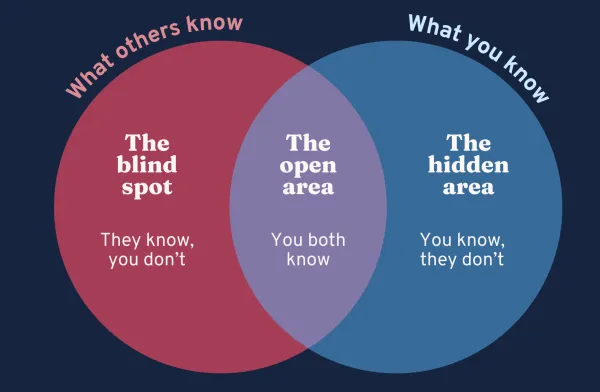
The Johari Window
The Johari Window is a simple way to understand this gap. It shows you four layers of awareness. Four ways your customer sees themselves and how you see them

1. Arena (Open Area)
What the customer knows about themselves
And what you can see
This is shared understanding
This is where most marketing lives
2. Blind Spot
What you can see
But the customer cannot
This comes from behaviour
Patterns
Data
This is where insight lives
3. Façade (Hidden Area)
What the customer knows
But does not share
Doubts
Fears
Uncertainty
This is where hesitation sits
4. Unknown
What neither you nor the customer can see yet
Untapped needs
Future demand
New opportunities
This is where breakthroughs happen
Where most marketing fails
Most businesses only work in the open area.
They ask questions and they get answers then, they build messaging from that. But that is surface level, it sounds right, It looks right, but it doesn’t always convert because the real decision is not made in the open it is made in the hidden
What this looks like in real life
Let’s make this practical.
Example 1
The gym that can’t retain members
The customer says
“I want to get fit”
That’s the open.
But underneath:
“I don’t want to feel judged”
“I don’t know what I’m doing”
That’s the hidden.
The business sees:
People sign up, Then stop showing up
That’s the blind spot.
Most gyms react by:
Running more offers, Lowering prices
But the real fix is simple:
Make the first experience safe, Make it guided, Remove uncertainty
When that happens:
People stay and people refer
Example 2
B2B leads that never close
The customer says
“Send me more info”
But what they mean is:
“I’m not sure this will work”
“I don’t want to make a bad decision”
That’s the hidden.
You see:
They attend calls but, they go quiet after
That’s the blind spot.
Most companies respond with:
More follow ups and more pressure
But what actually works:
Clear outcomes
Real proof
Reduced risk
Now the decision feels safe
Example 3
Ecommerce cart abandonment
The customer says nothing, they just leave
That silence is the signal
Behind it sits:
“Can I trust this?”
“What if this is wrong?”
That’s the hidden.
You see:
They reach checkout then drop
That’s the blind spot.
Most brands react with:
Discounts, Retargeting, More traffic
But what works is clear delivery, simple returns, real reviews.
Trust replaces doubt and conversion improves naturally.
Example 4
The consultant stuck at low prices
They say
“I need more clients”
But underneath:
“I’m not confident charging more”
That’s the hidden.
You see:
Low value clients
High effort
Low return
That’s the blind spot.
They try:
More outreach
Lower pricing
But the real move is:
Clear positioning
Defined outcome
Stronger offer
Now better clients show up
Example 5
SaaS product with low usage
The customer says
“This looks great”
But underneath:
“I don’t have time to learn this”
That’s the hidden.
You see:
Sign ups
No usage
That’s the blind spot.
Most companies add:
More features
But what works:
Simple onboarding
Fast first win
Clear use case
Now the product gets used
The pattern
In every case the same thing is happening
The business is solving the visible problem
Not the real one
They are listening to words
Not understanding meaning
And that creates friction
Where growth actually comes from
Real growth comes from expanding the open area.
From moving things out of:
Blind
Hidden
Unknown
Into shared understanding
You do that in two ways.
1. Listen properly
Not just to what people say
But how they say it
What they repeat
What they avoid
Look at behaviour
Look at drop offs
Look at hesitation
This is where the truth sits
2. Use data to see what they can’t
Patterns
Trends
Signals over time
This is where modern tools and AI give you an edge
Not to replace thinking
But to sharpen it
To see what humans miss
Why this matters
If you only understand what customers say
You compete on the surface
Price
Features
Noise
If you understand what they feel
but cannot explain
You stand out immediately
Because now your message feels different
It feels like it was made for them
The shift
Most businesses try to grow by doing more
More ads
More outreach
More content
That works for a bit
Then it breaks
Because the system underneath is wrong
When understanding is broken
execution gets messy
When understanding is clear
execution gets simple
The outcome
When you expand the open area:
Your message feels obvious
Your offer feels right
Your customer feels understood
And when that happens
Sales become easier
Not because you push harder
But because resistance drops
Simple rule
If something is not converting
Do not ask:
“How do we push harder?”
Ask:
“What are we not seeing?”
“What are they not saying?”
“What are we both missing?”
Fix that
And things move
Final thought
Most businesses don’t have a lead problem, They have an understanding problem. They are visible in the market
But not understood by the customer and that is the gap
Relationships are not built on what is visible
They are built on what is understood
